


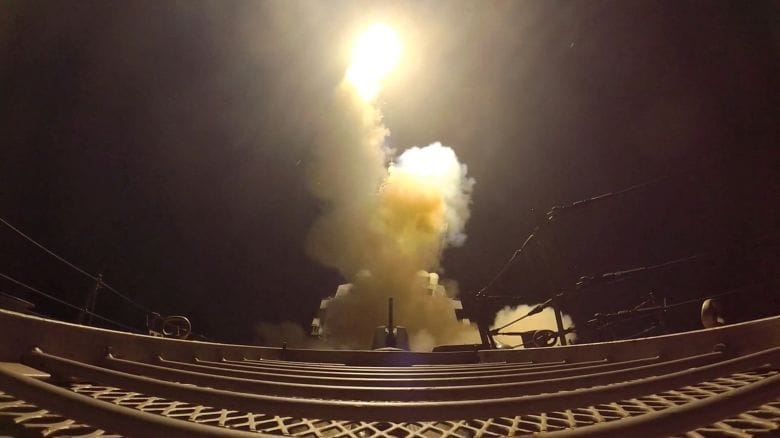
The latest strikes launched by the USA against Iran have created counterstrikes by Iranian forces in the Gulf in another round of an escalation that hits an already weak ceasefire.
As per reports from the US Central Command (CENTCOM), which manages the operations of US forces stationed in the Middle East, different sites across Iran were hit by American aircraft on Monday.
According to them, the US military used fighter jets, naval ships, one-way kamikaze drones, and, for the first time, kamikaze drones over the sea in order to hit militia air defense systems, coastal radar installations, weaponry, and boats.
It added that the aim of the operation was to impair Iran’s capability to strike at international shipping passing through the Strait of Hormuz.
Nonetheless, the strike by the US forces was perceived in eight cities of Khuzestan province by the government of Tehran, which refers to this military activity as unjustifiable.
It was reported that the strike occurred at a water pumping station in Mahshahr city, where a security man was killed and four civilians were injured.
Iranian military forces attacked American military sites in neighboring countries.
IRCG representatives confirmed that they struck a radar in Bahrain, a radar system for ships detection in Oman, and an American missile base in Kuwait.
According to the IRCG, the attacks in Kuwait eliminated two missile launchers along with some ammunition facilities around.
In the meantime, Bahrain government announced the alert, advising its citizens to keep calm and stay at the designated places, while the authorities of Jordan stated that all Iranian missiles entering their airspace had been intercepted.
The attacks carried out on Monday arose after a different occurrence of Airstrikes conducted by the US on Saturday when the US army hit an estimated total of around 140 targets within Iran in response to the attacks conducted by the IRGC on commercial shipping.
This most recent exchange occurs in the context of a Memorandum of Understanding signed by Washington and Tehran in mid-June, which followed the continuation of the ceasefire established in April and efforts to reopen the Strait of Hormuz
This agreement provides a roadmap for a settlement of the conflict that began on February 28, when the US and Israel attacked Iran, and for negotiations on more sensitive topics, namely Iran’s nuclear program.
However, it appears that the issue of the Strait of Hormuz, which was used to carry about 20 percent of the world energy exports before the fighting started, continues to be one of the main problems to solve. Trump has been interested in decreasing fuel prices in the run-up to the midterm elections. Iran insists that all ships should go through the shipping lane near its coast in order to keep control over the traffic in this particular area.
Iran has attacked ships passing through the southern route near Oman. On Monday Kpler shipping data indicated that traffic on the Strait of Hormuz was at its lowest level in five weeks.
Trump declared the ceasefire from last week but clarified later on Friday that both parties had reached an agreement to keep negotiating.